Theo Knijff, owner and founder of KAI-Con and a former manager at Dow, has spent his industry career tackling problems related to corrosion under insulation (CUI).
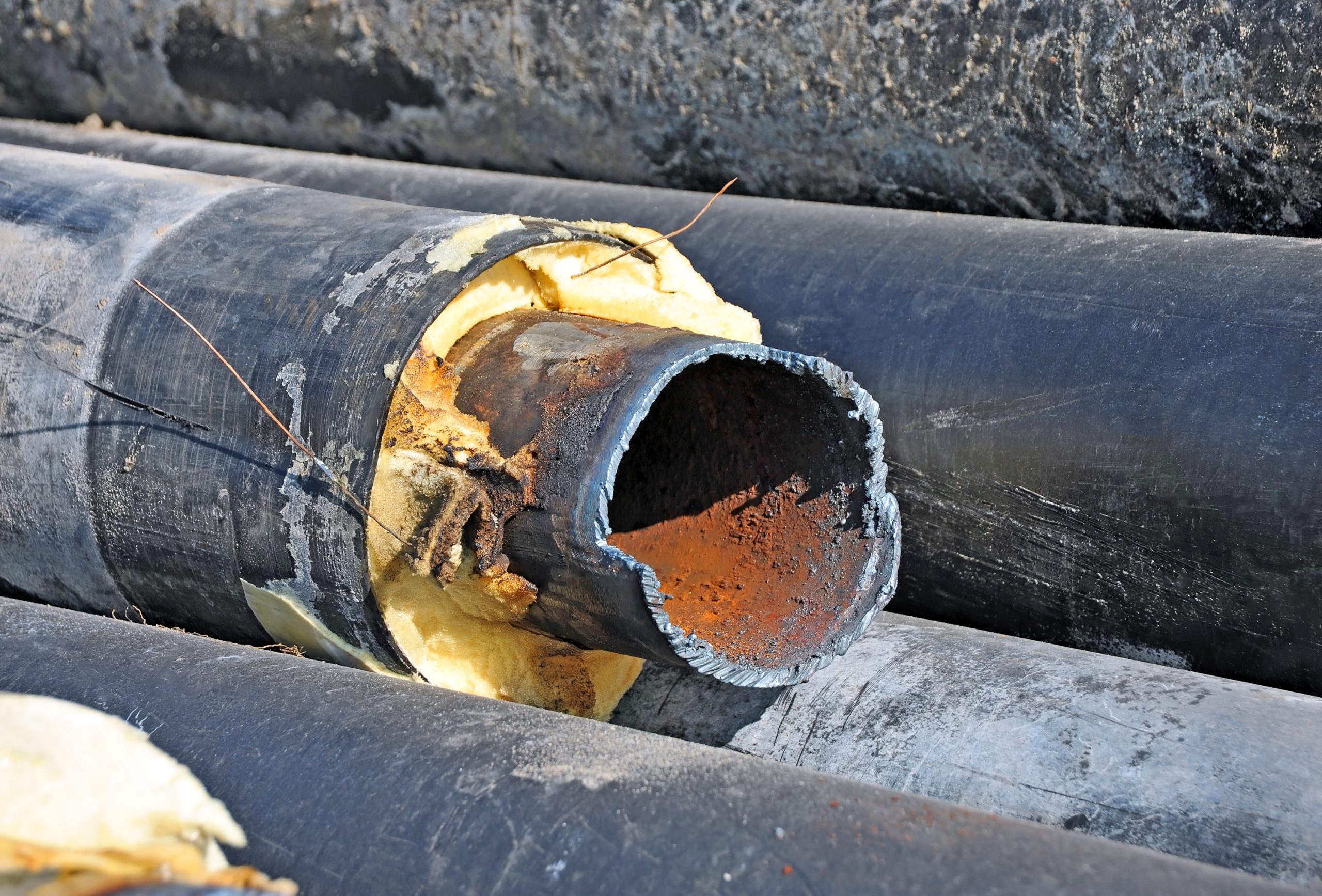
CUI is widely viewed around the world as one of the biggest asset integrity threats in the petrochemical industry, and it is considered the largest contributor to maintenance budgets.
Knijff’s experience stems from 36 years in asset integrity at large companies such as Dow Chemical, most recently as senior asset integrity manager for the company’s hydrocarbon business. Today, he runs KAI-Con, an independent consultancy helping organizations improve their asset integrity.
CorrosionRADAR (Cambridge, England), a leading provider of predictive CUI monitoring solutions, recently asked Knijff for an expert’s view on mitigating CUI risks while drawing upon his career experience of implementing remote monitoring. The following is Knijff’s perspective.
Whether the climate is cold and wet or dry and arid, corrosion under insulation (CUI) risks the integrity of oil, gas, and petrochemical assets. It’s not just an issue for regions such as the Gulf and North Sea Coasts, and weather is just one of many factors that can accelerate CUI risks.
Much of the industry has struggled to understand how unpredictable CUI can be. It won’t necessarily develop near a damaged section of insulation. Instead, moisture can ingress further, making it challenging to predict where deterioration could happen.
Also, CUI isn’t just a risk when assets operate between minus 12 °C (10.4 °F) to plus 177 °C (350 °F). Other conditions and operations, such as cyclic or intermittent service, can create environments where equipment and piping are susceptible to CUI.
As an example,
marine-based loading and unloading insulated carbon steel (CS) pipes typically operate intermittently. If they transport cold hydrocarbons, the normal operating condition can be below the CUI-susceptible temperature range. However, when not in service, these pipes can heat up due to sun radiation and become CUI-susceptible.
In this scenario, temperatures can cycle from -12 °C to above dewpoint and even up to 60 °C (140 °F). As a result, the assets will move in and out of the sweating zone, which can accelerate corrosion.
When the metal temperature is within this range, protrusions (such as drains, vents, and instrument connections) and components (such as fasteners, structural supports, dead legs, gasket parts, and valve components) on CS equipment and piping operating outside the CUI-susceptible temperature range can also be susceptible for CUI. Corrosion is especially likely when the asset operates below -20 °C (-4 °F), and it will be visible in areas where ice and rust build up.
CUI is, therefore, unpredictable. The industry must change its mindset and become more innovative to outsmart CUI.
Moving to Remote CUI Monitoring
Back in 2000, in this sector, CUI caused a serious process safety issue for a company. After this issue, there was a companywide action to improve its mechanical integrity (MI) program. The company did this by…
To read the full article click here: Materials Performance: How Remote CUI Monitoring is Transforming Asset Management