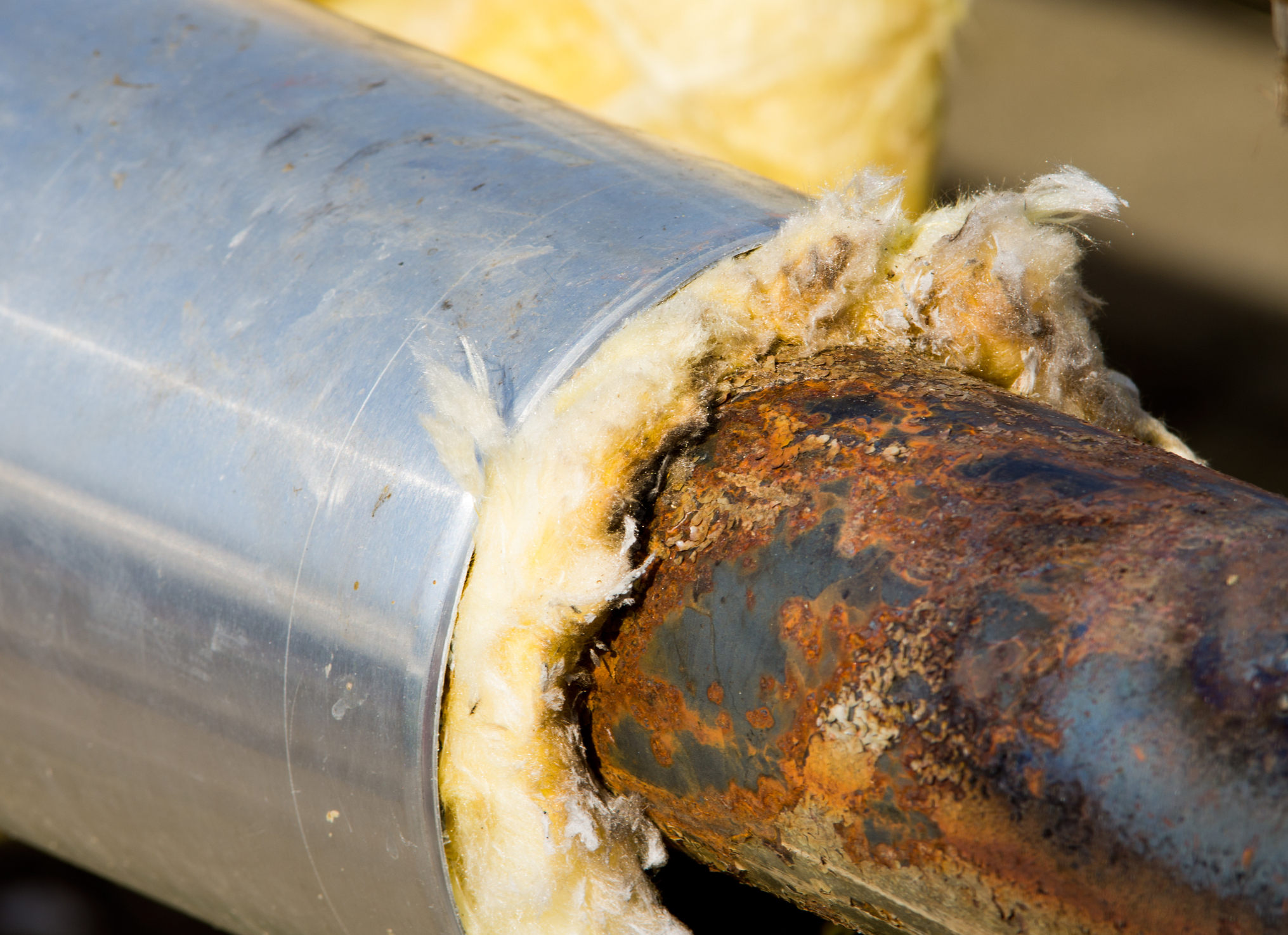
Internal corrosion is often a big focus in management strategies in the oil, gas, and petrochemical industries. But is external corrosion particularly hidden types, such as Corrosion Under Insulation (CUI), less of a threat?
The reality might surprise you (or not).
Here’s how the two compare:
1. Scope of Damage
Internal Corrosion: This may be limited to specific areas inside pipelines, tanks, or vessels where corrosive substances flow or stagnate. Suggested guidelines are API 653 and API 510.
External Corrosion: This can be unpredictable as all exposed surfaces are at risk, including pipelines, storage tanks, and vessels. Some examples of specific areas of concern include drains, sweating, and cyclical services. Suggested guidelines are API 583, and EFC N55 for CUI.
2. Detection Challenges
Internal Corrosion: Easier to monitor with tools like inline inspection devices like coupons, wall thickness monitors, and NDT methods like Ultrasonic or X-Ray.
External Corrosion: It is often hidden beneath insulation, coatings, or underground, making it difficult to detect before significant damage occurs. There are NDT detection methods including LR UT, Pulsed Eddy Current, and X-Rays. Advanced CUI monitoring systems (for example CorrosionRADAR) now offer remote monitoring for potential risks, enabling proactive and predictive intervention.
3. Management Requirements
Internal Corrosion: Typically managed with chemical inhibitors or by controlling flow conditions, proactive corrosion control documents, and frequent monitoring.
External Corrosion: Traditional strategies demand protective coatings, cathodic protection, and frequent inspections, requiring more time and resources to mitigate effectively. However, predictive strategies such as CUI monitoring now enable proactive monitoring and management of CUI, allowing for timely intervention and improved asset protection.
External corrosion, particularly CUI, presents a serious challenge to asset integrity. With its potential for widespread damage and hidden nature, proactive monitoring is essential to minimise risks, reduce costs, and safeguard operations.
Focusing on external corrosion as part of your strategy ensures a comprehensive approach to asset management.