It started when operators spotted a small pinhole leak in a 30-year-old gas pipe. While they jumped to isolate the line, it catastrophically failed, narrowly avoiding a major gas release.
That’s just one story about a pipeline failure. Many more have been reported. Remember, it was just a small pinhole from corrosion.
With sufficient oil and gas pipelines to circle the world 30 times, corrosion under insulation (CUI) is an immense challenge for the industry. And spotting at-risk areas has relied entirely on costly physical inspection – until now.
Dr Prafull Sharma, Chief Technology Officer at CorrosionRADAR, discusses issues surrounding the risk of CUI on assets, and explains how new technology can now enable a “predictive” approach that reduces failure risk significantly.
The Risk of CUI
2.5 trillion US dollars annually. That’s the amount revealed in the NACE Impact Study when considering the global cost of corrosion across all sectors and geographies.
It’s a staggering figure that puts the spotlight firmly on asset corrosion – not least in the oil and gas industry.
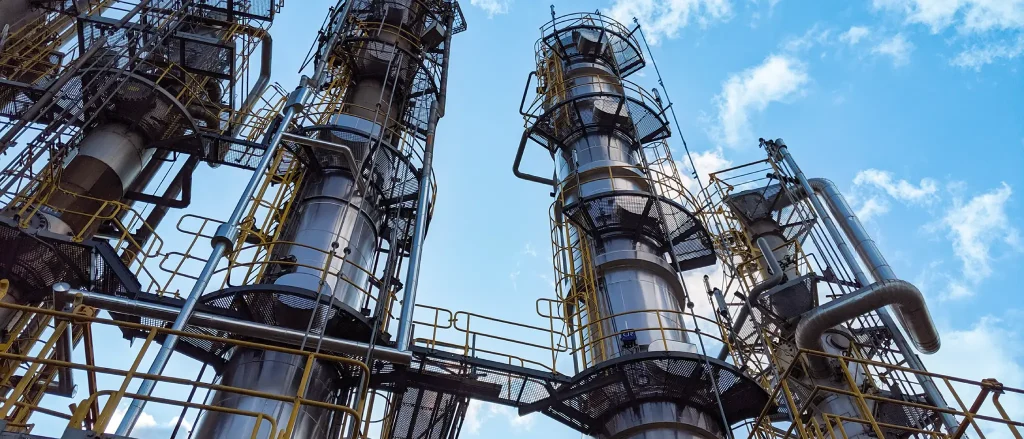
The sector insulates many pipes, pressure vessels and other components to safeguard the fluid inside and maintain its temperature. Insulation also protects nearby personnel from the dangers of extreme heat or cold.
But insulation presents an “invisible” corrosion risk. It’s called corrosion under insulation.
Moisture (due to process condensation, rainwater, or sweating of assets due to a specific temperature range) can find its way in and deteriorate the metal surface that’s hidden away below the insulation.
CUI accounts for 60% of pipeline failures in the oil and gas industry alone (as per NZTC UK).
Often undetected until substantial damage occurs, CUI can undermine asset integrity management when physical inspection methods alone fall short of reducing the risk. The sheer volume of surfaces to inspect can be overwhelming while many are almost impossible to reach without significant scaffolding.
Adding insult to injury, metals such as carbon steel can corrode up to 20 times faster under insulation than in normal aerated conditions where moisture can evaporate more easily. It’s clear to see why CUI remains an immense corrosion risk to manage.
The Impact of CUI Risk
There are two types of cost from CUI: direct costs and indirect costs. Both can be significantly harmful to the organisation in question (and the industry as a whole)…
To read the full article click here: Spotting the invisible risk with CUI monitoring | World Pipelines